Water is one of the most powerful images in language. It can represent peace, strength, change, emotion, growth, and even uncertainty. Because water appears in so many parts of daily life, writers and speakers often use it to explain feelings and ideas that are hard to describe with literal words.
People search for metaphors about water to improve their writing, understand literature, create meaningful social media captions, or simply learn how figurative language works. Water metaphors appear in novels, poems, speeches, classrooms, and everyday conversations. Learning what they mean makes it easier to recognize deeper messages and express thoughts more creatively.
This updated 2026 guide explains water metaphors in simple English, provides clear examples, and shows how you can use them naturally in both writing and conversation.
What Are Metaphors About Water?
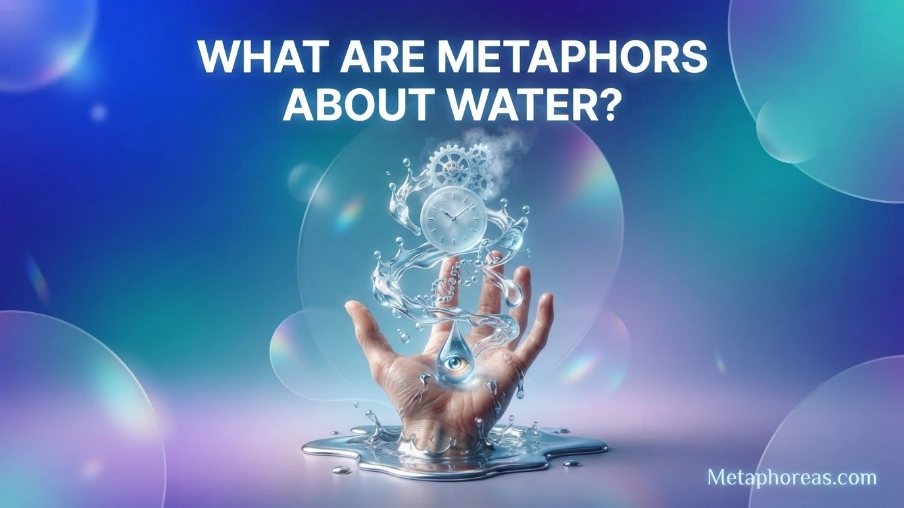
Metaphors about water compare a person, feeling, situation, or idea to water without using the words “like” or “as.” They help describe emotions, change, movement, and life’s experiences in a vivid and memorable way.
For example:
“Her thoughts were a rushing river.”
This sentence does not mean her thoughts were actually a river. Instead, it suggests they moved quickly and were difficult to control.
Because water can be calm, rough, deep, clear, or powerful, it offers many ways to describe different experiences.
Simple Definition
A water metaphor is a figure of speech that uses water or water-related images to represent something else.
Quick Explanation
Instead of stating an idea directly, a water metaphor paints a picture in the reader’s mind. This makes writing more emotional, descriptive, and engaging.
For instance:
- The meeting was a tidal wave of ideas. → Many ideas arrived all at once.
- His confidence flowed naturally. → His confidence appeared smooth and effortless.
- She stood like a lighthouse in the storm. → She gave hope during difficult times.
Summary Table
| Term | Meaning |
|---|---|
| Water metaphor | Comparing something to water or a water-related image to create deeper meaning. |
| Purpose | To make ideas easier to imagine and understand. |
| Common themes | Emotions, change, strength, growth, peace, uncertainty, resilience. |
| Common places used | Books, poems, speeches, conversations, social media, and creative writing. |
Why Do We Use Water Metaphors?
Water is familiar to everyone. We see it in rivers, oceans, lakes, rain, and streams. Because people understand how water behaves, it becomes a natural way to explain abstract ideas.
Writers use water metaphors to help readers picture emotions instead of simply reading about them. Rather than saying someone feels calm, describing them as “a still lake” creates a stronger image.
Water metaphors also make communication more memorable. They add emotion without making sentences difficult to understand.
Some common reasons people use water metaphors include:
- Showing emotional depth.
- Describing personal growth.
- Explaining change over time.
- Expressing peace or chaos.
- Creating stronger imagery in stories and poems.
- Making speeches more inspiring.
- Writing thoughtful captions and messages.
Whether you’re writing a school essay, a novel, or a heartfelt message, water metaphors can make your words feel more vivid and meaningful.
Examples of Metaphors About Water
Here are some original examples that show how water metaphors work in everyday English.
1. Life is a river.
Meaning: Life keeps moving forward with many twists and turns.
Example sentence: Life is a river that never stops flowing.
Tone: Neutral
2. Her mind was an ocean.
Meaning: She had deep thoughts and endless ideas.
Example sentence: Her mind was an ocean filled with curiosity.
Tone: Formal
3. His anger became a stormy sea.
Meaning: His anger grew intense and difficult to control.
Example sentence: One small mistake turned his anger into a stormy sea.
Tone: Neutral
4. Their friendship was a steady stream.
Meaning: Their friendship stayed constant and dependable.
Example sentence: Even after many years, their friendship remained a steady stream.
Tone: Neutral
5. Hope is a lighthouse.
Meaning: Hope provides guidance during difficult times.
Example sentence: Hope became a lighthouse during her hardest year.
Tone: Formal
6. Ideas flowed like a river.
Meaning: Thoughts came easily and continuously.
Example sentence: During the meeting, ideas flowed like a river.
Tone: Neutral
7. His patience was a deep lake.
Meaning: He remained calm even under pressure.
Example sentence: His patience was a deep lake that nothing could disturb.
Tone: Formal
8. Fear was a rising tide.
Meaning: Fear slowly increased.
Example sentence: As the deadline approached, fear became a rising tide.
Tone: Neutral
9. She became an anchor.
Meaning: She brought stability to everyone around her.
Example sentence: Her mother became the family’s anchor during difficult times.
Tone: Formal
10. Dreams are waves.
Meaning: Dreams come and go, sometimes growing stronger and sometimes fading away.
Example sentence: Dreams are waves that return when you least expect them.
Tone: Neutral
11. His words were a waterfall.
Meaning: He spoke quickly and continuously.
Example sentence: Once he started talking, his words became a waterfall.
Tone: Neutral
12. Confidence is a calm sea.
Meaning: True confidence is steady and peaceful.
Example sentence: Her confidence was a calm sea before the presentation.
Tone: Formal
13. The project hit rough waters.
Meaning: The project faced unexpected problems.
Example sentence: Halfway through, the project entered rough waters.
Tone: Neutral
14. Kindness ripples outward.
Meaning: One kind action can affect many people.
Example sentence: A simple compliment created ripples of kindness throughout the office.
Tone: Neutral
15. His courage was a flowing river.
Meaning: His bravery remained strong and continuous.
Example sentence: Even during difficult times, his courage flowed like a river.
Tone: Formal
16. Her smile was sunshine on water.
Meaning: Her smile brought warmth and happiness.
Example sentence: Her smile was sunshine on water after a stressful day.
Tone: Informal
17. The truth surfaced.
Meaning: Hidden facts eventually became known.
Example sentence: After months of questions, the truth finally surfaced.
Tone: Neutral
18. His dreams sailed across the horizon.
Meaning: He looked toward a hopeful future.
Example sentence: His dreams sailed across the horizon with endless possibilities.
Tone: Formal
19. The team rode the waves of change.
Meaning: The team adapted to changing situations.
Example sentence: Instead of resisting change, the team rode the waves together.
Tone: Professional
20. Her heart was a quiet harbor.
Meaning: She made others feel safe and welcome.
Example sentence: Whenever I visited my grandmother, her heart felt like a quiet harbor.
Tone: Formal
21. Success came in waves.
Meaning: Success arrived at different times rather than all at once.
Example sentence: The company’s success came in waves over several years.
Tone: Neutral
22. His worries were dark waters.
Meaning: He faced serious fears or uncertainty.
Example sentence: Before the interview, his thoughts drifted into dark waters.
Tone: Formal
23. Opportunity is a rising tide.
Meaning: New opportunities lift everyone involved.
Example sentence: The growing industry became a rising tide for young professionals.
Tone: Professional
24. Her determination carved a canyon.
Meaning: Steady effort created lasting results, just as water shapes rock over time.
Example sentence: Her determination carved a canyon through years of hard work.
Tone: Formal
25. Memories drift like floating leaves.
Meaning: Memories return gently and unexpectedly.
Example sentence: On quiet evenings, memories drifted like floating leaves across a pond.
Tone: Neutral
26. His spirit was unsinkable.
Meaning: He never gave up despite setbacks.
Example sentence: Even after several failures, his spirit remained unsinkable.
Tone: Inspirational
27. The future is an open sea.
Meaning: The future is full of possibilities and unknown paths.
Example sentence: After graduation, the future felt like an open sea.
Tone: Neutral
28. Her creativity overflowed.
Meaning: She had more ideas than she could easily express.
Example sentence: During the workshop, her creativity overflowed into every project.
Tone: Neutral
Quick Reference Table
| Water Metaphor | Meaning | Tone |
|---|---|---|
| Life is a river | Life keeps moving | Neutral |
| Her mind was an ocean | Deep thoughts | Formal |
| Anger became a stormy sea | Strong anger | Neutral |
| Friendship was a steady stream | Reliable friendship | Neutral |
| Hope is a lighthouse | Guidance during hardship | Formal |
| Ideas flowed like a river | Ideas came easily | Neutral |
| Patience was a deep lake | Calm under pressure | Formal |
| Fear was a rising tide | Fear increased gradually | Neutral |
| She became an anchor | Source of stability | Formal |
| Dreams are waves | Dreams change over time | Neutral |
| Words were a waterfall | Nonstop talking | Neutral |
| Confidence is a calm sea | Quiet self-assurance | Formal |
| Hit rough waters | Faced difficulties | Neutral |
| Kindness ripples outward | Good actions spread | Neutral |
| Courage was a flowing river | Steady bravery | Formal |
| Smile was sunshine on water | Warm and joyful | Informal |
| The truth surfaced | Hidden facts appeared | Neutral |
| Dreams sailed across the horizon | Hopeful future | Formal |
| Rode the waves of change | Adapted to change | Professional |
| Heart was a quiet harbor | Safe and comforting | Formal |
| Success came in waves | Success arrived gradually | Neutral |
| Worries were dark waters | Deep uncertainty | Formal |
| Opportunity is a rising tide | Shared growth | Professional |
| Determination carved a canyon | Persistence brings results | Formal |
| Memories drift like floating leaves | Gentle memories return | Neutral |
| Spirit was unsinkable | Never gave up | Inspirational |
| Future is an open sea | Endless possibilities | Neutral |
| Creativity overflowed | Many creative ideas | Neutral |
Real-Life Conversations
Conversation 1: Friends Talking
Emma: You seem much happier these days.
Jake: I finally stopped worrying about things I couldn’t control.
Emma: That’s a big change.
Jake: Yeah. Life is a river. I realized I have to keep moving instead of fighting every current.
Emma: I like that. It sounds much less stressful.
Conversation 2: At Work
Manager: The new software has created a few challenges.
Employee: I agree, but I think we’re just in rough waters right now.
Manager: That’s a good way to put it.
Employee: Once everyone learns the system, things should flow much more smoothly.
Manager: I believe so too.
Everyday Usage of Water Metaphors
Water metaphors are common because they help people express thoughts and emotions in a simple but memorable way. You can hear them in everyday conversations, read them in books, or see them in social media captions.
In Daily Conversation
People often use water metaphors to describe feelings or situations without sounding too formal.
Examples:
- I’m just trying to go with the flow.
- We’re in rough waters right now.
- Her support has been my anchor.
- The ideas kept flowing during the meeting.
In Writing
Authors use water imagery to make stories and poems more vivid. A river may represent life’s journey, while an ocean can symbolize mystery, freedom, or deep emotions.
On Social Media
Water metaphors are popular in captions because they are short and meaningful.
Examples:
- Go with the flow.
- Every wave brings a new beginning.
- Still waters hold quiet strength.
- Keep flowing toward your dreams.
Common Mistakes
| Mistake | Reason | Correct Version |
|---|---|---|
| Mixing different metaphors in one sentence | It creates confusing imagery. | Choose one clear water metaphor. |
| Taking the metaphor literally | Metaphors express ideas, not facts. | Focus on the hidden meaning. |
| Using too many metaphors together | Too many figurative expressions can distract readers. | Use one or two where they add value. |
| Choosing a metaphor that doesn’t fit the emotion | Different water images suggest different feelings. | Match calm water with peace and stormy water with conflict. |
| Repeating the same metaphor | Repetition makes writing less interesting. | Vary your figurative language naturally. |
Related Terms
Water metaphors are closely related to other types of figurative language, but they are not exactly the same.
| Term | Meaning | Difference |
|---|---|---|
| Metaphor | Directly compares one thing to another. | Says something is something else. |
| Simile | Compares using like or as. | Uses comparison words instead of a direct comparison. |
| Symbolism | An object represents a larger idea. | Water may symbolize life or purity throughout a story rather than in one sentence. |
| Personification | Gives human qualities to non-human things. | Example: The river whispered through the valley. |
Frequently Asked Questions
1. What is a water metaphor?
A water metaphor is a figure of speech that uses water or water-related images to describe another idea, feeling, or experience. Instead of giving a direct explanation, it creates a mental picture that helps readers understand the meaning more clearly.
2. Why is water used so often in metaphors?
Water changes shape, moves continuously, and can be calm or powerful. These qualities make it an effective way to describe emotions, personal growth, challenges, relationships, and life’s changing circumstances.
3. What is the difference between a water metaphor and a simile?
A metaphor makes a direct comparison, such as “Life is a river.” A simile uses words like “like” or “as,” such as “Life is like a river.” Both compare ideas, but they are structured differently.
4. Are water metaphors only used in poetry?
No. Water metaphors appear in novels, speeches, classrooms, business presentations, conversations, song lyrics, and social media posts. They are useful anywhere people want to communicate ideas in a more expressive way.
5. Can I use water metaphors in school essays?
Yes. Appropriate water metaphors can make essays more engaging and descriptive. They work best when they support your main idea and are easy for readers to understand.
6. What emotions can water metaphors express?
Water metaphors can express peace, joy, sadness, hope, fear, resilience, uncertainty, determination, and personal growth. The meaning depends on the type of water being described, such as a calm lake, rushing river, or stormy sea.
7. How can I create my own water metaphors?
Think about the qualities of water and connect them to a feeling or situation. For example, a waterfall may suggest endless energy, while a frozen lake might represent hidden emotions or silence. Keep the comparison simple and meaningful.
8. Are water metaphors common in everyday English?
Yes. Many familiar expressions, such as “go with the flow,” “test the waters,” and “in deep water,” have become part of everyday English. People often use them naturally without thinking about their figurative meaning.
Final Thoughts
Water metaphors help turn ordinary words into vivid images that readers and listeners can easily understand. From peaceful lakes to powerful oceans, each image carries a unique meaning that adds emotion and depth to communication. Whether you’re writing a story, preparing a speech, improving a school assignment, or looking for a meaningful caption, these expressions can make your message more memorable. With practice, you’ll find it easy to choose the right water metaphor for almost any situation and use it with confidence.

Nyro is the founder and lead content writer at Metaphoreas.com, with over 7 years of experience in creating high-quality, easy-to-understand digital content. He specializes in language, expressions, metaphors, idioms, writing guides, and educational resources that help readers communicate more effectively. His articles are carefully researched, fact-checked, and written in a simple, engaging style for learners of all levels. Over the years, Nyro has helped thousands of readers discover the deeper meanings behind words and phrases through practical, real-life examples. His mission is to make language learning enjoyable, accurate, and accessible for everyone. Through Metaphoreas.com, he continues to publish valuable, trustworthy content that informs, inspires, and empowers readers worldwide.