Surfing metaphors are figurative expressions that borrow ideas from surfing to describe life, emotions, work, relationships, and personal growth. They compare everyday situations to riding waves, staying balanced, or navigating changing conditions. People search for surfing metaphors to better understand their meaning, improve their writing, or find creative ways to express thoughts in conversations, speeches, social media posts, and storytelling.
Because many surfing phrases have both literal and figurative meanings, they can sometimes be confusing. This guide explains surfing metaphors in simple language, offers practical examples, and shows how to use them naturally in everyday communication.
What Are Surfing Metaphors?
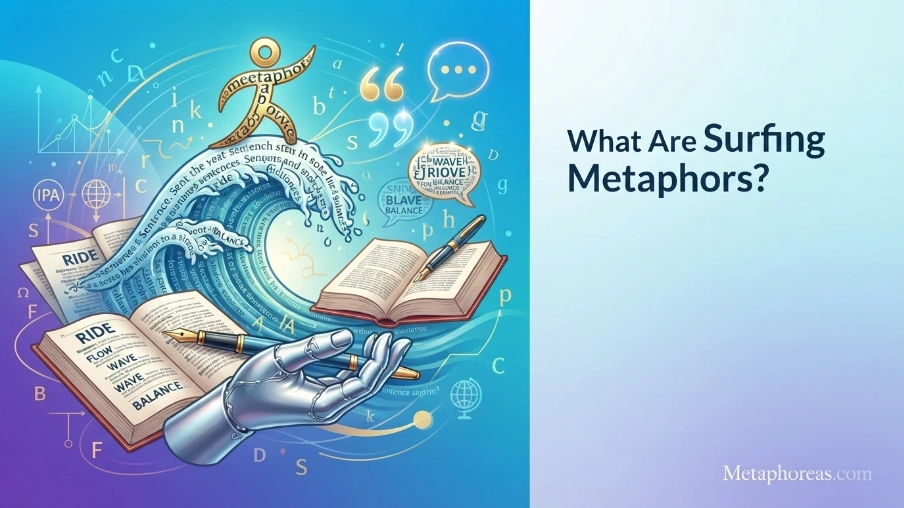
Surfing metaphors are expressions that use surfing experiences to explain real-life situations. They often represent balance, resilience, timing, change, risk, patience, and personal growth. Instead of talking about surfing itself, these expressions help describe emotions, challenges, opportunities, and success in a vivid and memorable way.
Surfing has long been linked with adapting to changing conditions. Just as surfers cannot control the ocean but can learn to work with it, people often use surfing language to describe handling life’s ups and downs.
These metaphors appear in:
- Everyday conversations
- Motivational speeches
- Books and novels
- Business presentations
- Social media captions
- Personal development writing
- Sports journalism
Many surfing metaphors work because nearly everyone understands the image of a wave, even if they have never surfed.
Definition & Meaning
A surfing metaphor is a figure of speech that compares a life experience, feeling, or situation to some part of surfing.
Instead of describing events directly, it creates a mental picture that makes the message easier to understand and remember.
For example:
“She’s riding a wave of success.”
This does not mean she is surfing in the ocean. It means she is experiencing a period of continued achievement.
Surfing Metaphors at a Glance
| Term | Meaning |
|---|---|
| Surfing metaphor | A comparison using surfing imagery to explain another situation |
| Literal meaning | Talking about actual surfing |
| Figurative meaning | Talking about life, emotions, work, or relationships |
| Common themes | Balance, change, courage, patience, opportunity, resilience |
| Used in | Writing, speaking, business, education, social media |
Why We Use Surfing Metaphors
Surfing metaphors make ideas feel more visual and easier to understand. Instead of giving a long explanation, one simple image can express a complex situation.
For example, saying someone is “caught in a rip current” immediately suggests they are struggling with something difficult. The picture is stronger than simply saying they have a problem.
People also use surfing metaphors because they:
- Make stories more interesting
- Express emotions clearly
- Add creativity to writing
- Inspire confidence and perseverance
- Explain difficult ideas through familiar images
- Create memorable speeches and conversations
In Everyday Conversation
Friends often use surfing metaphors without realizing it.
Examples include:
- “Go with the flow.”
- “Ride the wave.”
- “Catch the next opportunity.”
These expressions sound natural because they describe experiences everyone understands.
In Professional Communication
Managers, coaches, and leaders often use surfing language to encourage teams.
For example:
- “We’re riding a wave of customer growth.”
- “Stay balanced during the busy season.”
- “Let’s catch this opportunity before it passes.”
These expressions help motivate people without sounding overly formal.
On Social Media
Surfing metaphors are common in captions because they are short, positive, and inspiring.
Examples include:
- “Riding life’s best wave.”
- “Trust the tide.”
- “Every wave teaches something.”
- “Find your balance.”
These phrases work well with travel, beach, fitness, and motivational posts.
Surfing Metaphor Examples
Below are practical examples that show how surfing metaphors work in everyday English.
1. Ride the Wave
Meaning: Continue enjoying success or positive momentum.
Example sentence:
“Our business is riding the wave after the product launch.”
Tone: Neutral
2. Catch a Wave
Meaning: Take advantage of a new opportunity.
Example sentence:
“She caught the wave of remote work before many others.”
Tone: Neutral
3. Go with the Flow
Meaning: Accept changes without resisting them.
Example sentence:
“We didn’t have a plan, so we just went with the flow.”
Tone: Informal
4. Wipe Out
Meaning: Experience a major failure or setback.
Example sentence:
“The company wiped out after several poor financial decisions.”
Tone: Neutral
5. Find Your Balance
Meaning: Create stability during difficult situations.
Example sentence:
“It took time, but he finally found his balance between work and family.”
Tone: Neutral
6. Paddle Through
Meaning: Keep working despite obstacles.
Example sentence:
“We paddled through the difficult months together.”
Tone: Neutral
7. Catch the Perfect Wave
Meaning: Seize an ideal opportunity.
Example sentence:
“She caught the perfect wave by investing early.”
Tone: Neutral
8. Stay Afloat
Meaning: Continue surviving during hardship.
Example sentence:
“Small businesses struggled to stay afloat.”
Tone: Neutral
9. Face the Tide
Meaning: Deal directly with a challenge.
Example sentence:
“It’s time to face the tide instead of avoiding the issue.”
Tone: Formal
10. Turn the Tide
Meaning: Change a negative situation into a positive one.
Example sentence:
“The new strategy turned the tide for the company.”
Tone: Formal
11. Drift Too Far
Meaning: Lose focus or direction.
Example sentence:
“Without clear goals, the project drifted too far.”
Tone: Neutral
12. Keep Your Board Steady
Meaning: Stay calm under pressure.
Example sentence:
“Even during the crisis, she kept her board steady.”
Tone: Neutral
13. Wait for the Right Wave
Meaning: Be patient before taking action.
Example sentence:
“He waited for the right wave before changing careers.”
Tone: Neutral
14. Read the Water
Meaning: Understand a situation before making a decision.
Example sentence:
“Good leaders know how to read the water.”
Tone: Formal
15. Surf Through Change
Meaning: Adapt successfully to new circumstances.
Example sentence:
“The organization surfed through change with confidence.”
Tone: Neutral
16. Ride Out the Storm
Meaning: Stay strong during a difficult period until it passes.
Example sentence:
“The team rode out the storm and finished the project on time.”
Tone: Neutral
17. Swim Against the Current
Meaning: Go against popular opinion or expectations.
Example sentence:
“She chose to swim against the current by starting her own business.”
Tone: Formal
18. Make Waves
Meaning: Create change or attract attention.
Example sentence:
“The young designer is making waves in the fashion industry.”
Tone: Neutral
19. Lost at Sea
Meaning: Feel confused or unsure about what to do next.
Example sentence:
“After graduating, he felt lost at sea.”
Tone: Informal
20. Catch the Next Wave
Meaning: Prepare for the next trend or opportunity.
Example sentence:
“Successful companies always look for the next wave.”
Tone: Neutral
21. Stay Above Water
Meaning: Manage to survive despite difficulties.
Example sentence:
“Many families worked extra jobs just to stay above water.”
Tone: Neutral
22. Ride the Current
Meaning: Move with changing circumstances instead of resisting them.
Example sentence:
“Sometimes it’s smarter to ride the current than fight it.”
Tone: Neutral
23. Navigate Rough Waters
Meaning: Handle a challenging or uncertain situation.
Example sentence:
“The company navigated rough waters during the recession.”
Tone: Formal
24. Take the Drop
Meaning: Commit to a challenge with confidence.
Example sentence:
“Starting a new career felt scary, but she finally took the drop.”
Tone: Informal
25. Find Your Wave
Meaning: Discover what suits your skills or personality.
Example sentence:
“Don’t compare yourself with others. Find your own wave.”
Tone: Informal
26. Chasing the Horizon
Meaning: Constantly pursuing new goals or dreams.
Example sentence:
“He’s always chasing the horizon with fresh ideas.”
Tone: Neutral
27. Roll with the Waves
Meaning: Accept life’s ups and downs with a positive attitude.
Example sentence:
“You can’t control everything, so just roll with the waves.”
Tone: Informal
28. Paddle Your Own Wave
Meaning: Follow your own path without copying others.
Example sentence:
“She built her career by paddling her own wave.”
Tone: Informal
29. Rise with the Tide
Meaning: Grow because of improving circumstances.
Example sentence:
“Local businesses rose with the tide as tourism increased.”
Tone: Neutral
30. Every Wave Is a Lesson
Meaning: Every experience, good or bad, teaches something valuable.
Example sentence:
“Even after failing the interview, he believed every wave is a lesson.”
Tone: Inspirational
Quick Reference Table
| Expression | Meaning | Tone |
|---|---|---|
| Ride the wave | Enjoy ongoing success | Neutral |
| Catch a wave | Take an opportunity | Neutral |
| Go with the flow | Accept change naturally | Informal |
| Wipe out | Experience a major setback | Neutral |
| Find your balance | Create stability | Neutral |
| Paddle through | Keep going despite challenges | Neutral |
| Catch the perfect wave | Seize the best opportunity | Neutral |
| Stay afloat | Continue despite hardship | Neutral |
| Face the tide | Confront a challenge | Formal |
| Turn the tide | Reverse a negative situation | Formal |
| Drift too far | Lose direction | Neutral |
| Keep your board steady | Stay calm under pressure | Neutral |
| Wait for the right wave | Be patient | Neutral |
| Read the water | Understand a situation first | Formal |
| Surf through change | Adapt successfully | Neutral |
| Ride out the storm | Endure difficult times | Neutral |
| Swim against the current | Go against popular opinion | Formal |
| Make waves | Create change or gain attention | Neutral |
| Lost at sea | Feel confused | Informal |
| Catch the next wave | Prepare for future opportunities | Neutral |
| Stay above water | Barely manage to survive | Neutral |
| Ride the current | Adapt to changing conditions | Neutral |
| Navigate rough waters | Handle uncertainty | Formal |
| Take the drop | Commit to a challenge | Informal |
| Find your wave | Discover your path | Informal |
| Chasing the horizon | Pursue new dreams | Neutral |
| Roll with the waves | Accept life’s changes | Informal |
| Paddle your own wave | Follow your own path | Informal |
| Rise with the tide | Benefit from positive changes | Neutral |
| Every wave is a lesson | Learn from every experience | Inspirational |
Real-Life Conversations
Conversation 1: Friends Planning a Career Change
Emma: I’m thinking about changing careers, but I’m nervous.
Jake: That’s normal. Sometimes you have to wait for the right wave instead of rushing.
Emma: I think the opportunity is finally here.
Jake: Then take the drop. You won’t know what you’re capable of until you try.
Emma: You’re right. I’ll stop overthinking and ride the wave.
Conversation 2: Team Meeting at Work
Manager: This quarter has been challenging, but we’ve managed to stay above water.
Employee: The new marketing campaign seems promising.
Manager: I agree. If we work together, we can turn the tide and build on this momentum.
Employee: We’ll keep adapting and navigate these rough waters one step at a time.
Everyday Usage
Surfing metaphors appear in many parts of daily life because they describe change and progress in a simple, memorable way.
In Conversations
People use them to encourage friends, describe challenges, or celebrate success.
Examples:
- “You’re riding a wave of good luck.”
- “Just go with the flow.”
- “You’ll find your balance.”
In Writing
Authors often use surfing imagery to make stories, speeches, and personal essays feel more vivid. A single metaphor can show determination, hope, or uncertainty without lengthy explanations.
On Social Media
These expressions work well as captions because they’re short, positive, and easy to understand.
Examples include:
- “Riding my own wave.”
- “Growth comes one wave at a time.”
- “Finding balance every day.”
- “The tide always changes.”
Common Mistakes
| Mistake | Reason | Correct Version |
|---|---|---|
| Using a surfing metaphor literally in a non-surfing context | It changes the intended meaning | Use it figuratively when talking about life or situations |
| Mixing unrelated metaphors | Combining different images can confuse readers | Stick with one clear image, such as waves or tides |
| Overusing surfing metaphors | Too many can make writing feel repetitive | Use them only where they add meaning |
| Choosing the wrong tone | Some expressions are casual, while others fit formal settings | Match the expression to your audience |
| Explaining the metaphor after using it | The impact is lost if you immediately explain the obvious | Let the context communicate the meaning naturally |
Related Terms
Surfing metaphors share similarities with other figurative expressions, but they focus on different ideas.
| Term | Main Focus | How It Differs |
|---|---|---|
| Surfing metaphors | Waves, balance, timing, adaptability | Inspired by surfing and ocean movement |
| Ocean metaphors | The sea, depth, mystery, emotions | Broader than surfing and not tied to riding waves |
| Life journey metaphors | Roads, paths, destinations | Focus on progress rather than changing conditions |
| Sports metaphors | Competition, teamwork, winning | Draw from many sports instead of surfing alone |
Frequently Asked Questions
What is a surfing metaphor?
A surfing metaphor is a figurative expression that uses surfing-related ideas—such as waves, tides, or balance—to explain situations in everyday life. Instead of describing actual surfing, it helps people talk about challenges, growth, opportunities, or emotions in a vivid and memorable way.
Are surfing metaphors only used by surfers?
No. Most people who use surfing metaphors have never surfed. Expressions like “ride the wave” or “go with the flow” have become part of everyday English because their meanings are easy to understand.
Why are surfing metaphors so popular?
They create clear mental images and communicate ideas quickly. Since many people recognize the movement of waves and the challenge of staying balanced, these expressions make conversations and writing more engaging.
Can surfing metaphors be used in professional settings?
Yes. Many business leaders, teachers, coaches, and speakers use them during presentations, meetings, and training sessions. Expressions like “turn the tide” or “navigate rough waters” sound professional while encouraging resilience and thoughtful decision-making.
What’s the difference between a metaphor and an idiom?
A metaphor directly compares one thing to another to create meaning. An idiom is a fixed expression whose meaning cannot always be understood from the individual words. Some surfing expressions, such as “ride the wave,” function as both a metaphor and an idiom because their figurative meaning is widely recognized.
How can I use surfing metaphors naturally?
Choose expressions that match the situation instead of forcing them into every conversation. A well-placed metaphor can strengthen your message, but using too many at once may distract readers or listeners.
Are surfing metaphors suitable for creative writing?
Absolutely. They work well in stories, speeches, poetry, and personal essays because they add movement, emotion, and imagery. Writers often use them to describe change, perseverance, hope, or personal transformation.
Do surfing metaphors have the same meaning in every culture?
Not always. While many English-speaking audiences understand common surfing expressions, people from different cultural backgrounds may interpret them differently. Consider your audience and provide enough context if you’re using a less familiar phrase.
Final Thoughts
Surfing metaphors turn everyday experiences into memorable images that are easy to understand. Whether you’re talking about success, setbacks, change, or personal growth, these expressions help your message feel more vivid and relatable. By learning when and how to use them, you can make conversations, presentations, and writing more engaging without sounding forced. Start with a few common phrases, use them where they fit naturally, and you’ll soon feel confident riding the wave of expressive English.
Discover More Post
Metaphors About Water Meaning Examples and Everyday Use 2026

Moryn is the lead writer at Metaphoreas with 6+ years of experience in English language education and digital content writing. Passionate about making complex language concepts simple, Moryn creates well-researched articles on metaphors, idioms, figurative language, and everyday expressions. Every guide is written with accuracy, clarity, and the reader’s learning experience in mind. Through Metaphoreas, Moryn aims to help learners, writers, and students master English with confidence.