People often search for metaphors for crazy when they want a more creative way to describe unusual, wild, unpredictable, or irrational behavior. These expressions appear in everyday conversations, books, movies, social media posts, and creative writing. They can make descriptions more colorful, but they also need careful use because some words related to mental health may sound insensitive in certain situations
this guide explains what metaphors for crazy mean, why people use them, and how to choose expressions that fit different situations. You’ll also find easy explanations, natural examples, and practical tips that help you write and speak with more confidence while respecting your audience.
What Are Metaphors for Crazy?
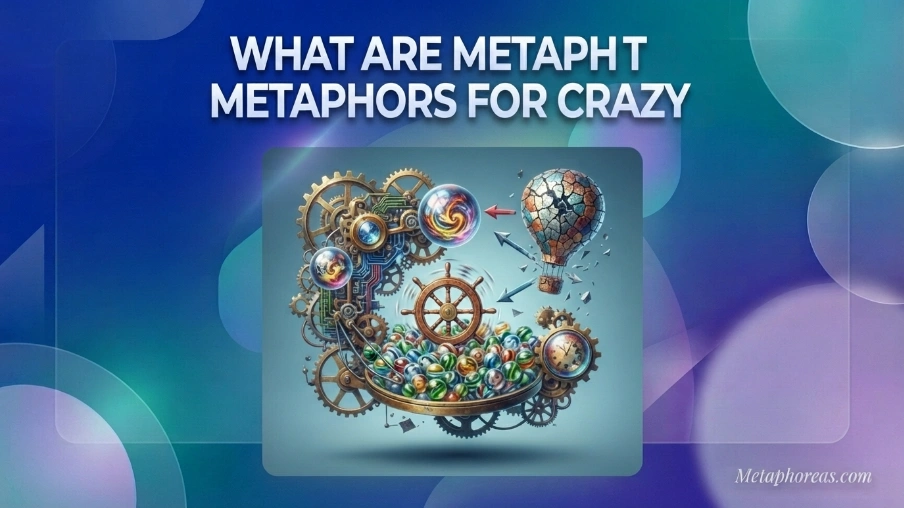
Metaphors for crazy are figurative expressions that describe someone or something as extremely wild, chaotic, unpredictable, or unbelievable without meaning they actually have a mental illness. They compare behavior to objects, animals, events, or situations to create a stronger image. Many of these expressions are used in casual speech, storytelling, humor, and creative writing instead of describing someone’s real mental health.
A metaphor paints a picture in the reader’s mind. Instead of saying someone acted strangely, you compare their behavior to something memorable.
For example:
- He was a loose cannon suggests someone acts without thinking.
- Her mind was a whirlwind shows racing or confusing thoughts.
- The meeting turned into a circus describes complete chaos.
These comparisons make writing more vivid and easier to imagine.
Definition and Meaning
In simple English, a metaphor for crazy is a comparison that describes extreme behavior, confusion, excitement, or chaos without using those exact words.
Unlike a literal description, a metaphor helps readers feel the situation instead of simply reading about it.
For instance:
- Literal: The room became very chaotic.
- Metaphor: The room became a zoo.
The second sentence creates a much clearer picture.
Quick Summary Table
| Term | Meaning |
|---|---|
| Metaphor for crazy | A figurative comparison describing wild or unpredictable behavior |
| Literal meaning | Does not mean someone truly has a mental illness |
| Common use | Stories, conversations, speeches, movies, and social media |
| Purpose | Makes descriptions stronger and more memorable |
| Best practice | Use thoughtfully and avoid insulting real mental health conditions |
Why We Use Metaphors for Crazy
People use these expressions because they communicate emotion much faster than plain words.
Instead of saying something was “very confusing,” a metaphor instantly creates an image that readers understand.
Common reasons include:
- To make writing more interesting
- To describe unexpected behavior
- To add humor to conversations
- To show excitement or disorder
- To tell stories with stronger imagery
- To express surprise
- To describe fast-changing situations
- To make dialogue sound natural
You’ll hear these expressions in many places:
- Everyday conversations
- TV shows
- Movies
- Novels
- Social media captions
- Text messages
- Sports commentary
- Workplace discussions (using milder expressions)
Choosing the right metaphor depends on your audience. Friendly conversations often allow playful expressions, while professional settings usually call for more neutral language.
1. A Loose Cannon
Meaning: Someone who acts without thinking and is hard to predict.
Example: Jake is a loose cannon during negotiations.
Tone: Neutral
2. A Whirlwind
Meaning: Full of fast-moving thoughts, energy, or confusion.
Example: After hearing the news, her mind became a whirlwind.
Tone: Neutral
3. A Circus
Meaning: A situation filled with disorder and confusion.
Example: The office became a circus after the power went out.
Tone: Informal
4. A Zoo
Meaning: A noisy and uncontrollable environment.
Example: The classroom was a zoo before the teacher arrived.
Tone: Informal
5. A Roller Coaster
Meaning: Constant emotional highs and lows.
Example: His week has been a roller coaster.
Tone: Neutral
6. A Tornado
Meaning: Someone brings sudden chaos wherever they go.
Example: The toddlers ran through the house like a tornado.
Tone: Neutral
7. A Firecracker
Meaning: Someone with explosive energy or reactions.
Example: She’s a firecracker during debates.
Tone: Informal
8. A Storm
Meaning: Powerful emotions or dramatic behavior.
Example: His anger became a storm.
Tone: Neutral
9. A Wild Horse
Meaning: Someone difficult to control.
Example: He’s a wild horse once the competition starts.
Tone: Neutral
10. A Rocket Without a Steering Wheel
Meaning: Fast-moving but lacking direction.
Example: The project felt like a rocket without a steering wheel.
Tone: Informal
11. A Volcano
Meaning: Someone suddenly explodes with emotion.
Example: She became a volcano after hearing the accusation.
Tone: Neutral
12. A Pressure Cooker
Meaning: A person holding in stress until it bursts.
Example: He’d been a pressure cooker all week.
Tone: Neutral
13. A Bee Hive
Meaning: Constant busy movement and confusion.
Example: The airport was a bee hive before the holiday.
Tone: Neutral
14. A Pinball Machine
Meaning: Thoughts or actions jumping rapidly from one thing to another.
Example: His attention worked like a pinball machine.
Tone: Neutral
15. A Monkey on Espresso
Meaning: Extremely energetic and impossible to slow down.
Example: The kids were like monkeys on espresso after the birthday cake.
Tone: Informal
16. A Spinning Top
Meaning: Someone moving endlessly without slowing down.
Example: I’ve been a spinning top all day.
Tone: Neutral
17. A Broken Compass
Meaning: Someone who seems lost or confused.
Example: Without a plan, the team became a broken compass.
Tone: Neutral
18. A Lightning Storm
Meaning: Sudden bursts of unpredictable action.
Example: His ideas came like a lightning storm.
Tone: Neutral
19. A Popcorn Machine
Meaning: Thoughts appearing rapidly one after another.
Example: Ideas popped through her mind like popcorn.
Tone: Informal
20. A Wind-Up Toy
Meaning: Someone who never seems to stop moving.
Example: My nephew is a wind-up toy during family gatherings.
Tone: Informal
21. A Runaway Train
Meaning: Something moving out of control.
Example: The rumor became a runaway train.
Tone: Neutral
22. A Lightning Bolt
Meaning: Sudden, unexpected energy or action.
Example: He rushed into the room like a lightning bolt.
Tone: Neutral
23. A Puppet Without Strings
Meaning: Behavior that appears completely uncontrolled.
Example: Everything felt like a puppet without strings.
Tone: Informal
24. A House on Fire
Meaning: Extremely fast or intense activity.
Example: The team worked like a house on fire before the deadline.
Tone: Neutral
25. A Hurricane
Meaning: Powerful and overwhelming behavior.
Example: She entered the meeting like a hurricane.
Tone: Neutral
26. A Boiling Kettle
Meaning: Growing tension ready to overflow.
Example: The crowd became a boiling kettle.
Tone: Neutral
27. A Puzzle Missing Pieces
Meaning: A confusing or hard-to-understand situation.
Example: The explanation was a puzzle missing pieces.
Tone: Neutral
28. A Firestorm
Meaning: A sudden wave of conflict or strong reactions.
Example: The announcement created a firestorm online.
Tone: Neutral
29. A Kite in a Hurricane
Meaning: Someone struggling to stay in control.
Example: He looked like a kite in a hurricane during the interview.
Tone: Neutral
30. A Blender on High Speed
Meaning: A mind or situation filled with nonstop activity and confusion.
Example: After the emergency call, my thoughts were a blender on high speed.
Tone: Informal
Quick Reference Table
| Metaphor | Meaning | Tone |
|---|---|---|
| Loose cannon | Acts without thinking | Neutral |
| Whirlwind | Fast, confusing thoughts or activity | Neutral |
| Circus | Complete disorder | Informal |
| Zoo | Loud, chaotic place | Informal |
| Roller coaster | Emotional ups and downs | Neutral |
| Tornado | Leaves chaos behind | Neutral |
| Firecracker | Full of explosive energy | Informal |
| Storm | Strong emotions or conflict | Neutral |
| Wild horse | Hard to control | Neutral |
| Rocket without a steering wheel | Fast but directionless | Informal |
| Volcano | Sudden emotional outburst | Neutral |
| Pressure cooker | Built-up stress | Neutral |
| Bee hive | Busy, nonstop activity | Neutral |
| Pinball machine | Constantly changing thoughts | Neutral |
| Monkey on espresso | Extremely energetic | Informal |
| Spinning top | Always moving | Neutral |
| Broken compass | Confused or lost | Neutral |
| Lightning storm | Sudden, unpredictable activity | Neutral |
| Popcorn machine | Rapid flow of ideas | Informal |
| Wind-up toy | Never stops moving | Informal |
| Runaway train | Out of control | Neutral |
| Lightning bolt | Sudden burst of action | Neutral |
| Puppet without strings | Uncontrolled behavior | Informal |
| House on fire | Fast-paced activity | Neutral |
| Hurricane | Overwhelming force | Neutral |
| Boiling kettle | Rising tension | Neutral |
| Puzzle missing pieces | Difficult to understand | Neutral |
| Firestorm | Intense public reaction | Neutral |
| Kite in a hurricane | Struggling to stay in control | Neutral |
| Blender on high speed | Overloaded mind or situation | Informal |
Real-Life Conversations
Conversation 1: Friends Talking
Emma: Did you see Ryan at the concert?
Liam: Yeah! He was a firecracker all night.
Emma: Then he climbed onto the stage.
Liam: I know. He’s a loose cannon sometimes.
Emma: The crowd turned into a circus after that.
Liam: It was wild, but everyone had fun.
Conversation 2: Workplace Discussion
Manager: How did yesterday’s project meeting go?
Sarah: It started well, but it became a runaway train after the deadline changed.
Manager: Was everyone confused?
Sarah: A little. There were too many new ideas at once, and the discussion felt like a whirlwind.
Manager: Let’s organize everything before the next meeting.
Everyday Usage
These metaphors appear in many parts of daily life. Each setting calls for a slightly different style.
In Everyday Conversation
Friends often use playful expressions to describe surprising behavior.
- My morning was a roller coaster.
- The kids were a tornado today.
- That party became a circus.
These phrases sound natural and make conversations more engaging.
In Writing
Authors use metaphors to create vivid scenes.
Instead of writing:
The city was noisy.
A writer might say:
The city was a bee hive, buzzing from sunrise to midnight.
The second version helps readers picture the scene.
On Social Media
Short metaphors fit well in captions and posts.
Examples include:
- My brain is a blender on high speed today.
- Monday has been a roller coaster.
- This group chat is a circus.
These expressions quickly communicate feelings without long explanations.
In Professional Settings
At work, it’s usually better to choose neutral metaphors.
For example:
- The project became a runaway train.
- The discussion turned into a whirlwind.
Avoid expressions that could sound insulting toward people.
Common Mistakes
| Mistake | Reason | Correct Version |
|---|---|---|
| Using metaphors as medical descriptions | They are figurative, not clinical | Use them only for behavior or situations |
| Choosing overly offensive expressions | Some phrases may hurt or offend | Pick neutral metaphors like whirlwind or roller coaster |
| Using too many metaphors together | Writing becomes confusing | Stick to one strong image at a time |
| Mixing unrelated metaphors | The picture becomes unclear | Keep the comparison consistent |
| Using informal metaphors in formal reports | They may sound unprofessional | Choose simple, neutral language |
Related Terms
Although they sound similar, these ideas are not exactly the same.
| Term | Meaning | Difference |
|---|---|---|
| Metaphor | A direct comparison | Says one thing is another. Example: Life is a journey. |
| Simile | A comparison using like or as | Example: He acted like a tornado. |
| Idiom | A fixed expression with a special meaning | Meaning cannot always be guessed from the words. Example: Off the wall. |
Understanding these differences helps you choose the right expression for your writing and conversations.
Frequently Asked Questions
1. What are metaphors for crazy?
Metaphors for crazy are figurative expressions that describe unusual, chaotic, unpredictable, or intense behavior through comparison. They create a mental picture rather than describing someone’s actual mental health.
2. Are these expressions offensive?
Some can be. Expressions that mock or stereotype mental illness may upset people. Neutral metaphors like whirlwind, roller coaster, or runaway train are usually safer because they describe situations instead of labeling people.
3. Can I use these metaphors in school writing?
Yes, if they fit the assignment and audience. They work well in stories, essays, and creative writing because they make descriptions more vivid. For formal reports or academic papers, use them only when they add clear meaning.
4. What’s the difference between a metaphor and a simile?
A metaphor says something is something else, while a simile compares two things using like or as. For example, His mind was a whirlwind is a metaphor, while His mind was like a whirlwind is a simile.
5. Why do writers use metaphors instead of literal words?
Metaphors help readers imagine a scene, emotion, or action more clearly. A strong comparison often creates a bigger impact than a simple description, making stories and conversations more memorable.
6. Are metaphors for crazy common in everyday speech?
Yes. People often use them when talking with friends, sharing stories, posting on social media, or describing exciting events. Many have become part of everyday American English.
7. Can these metaphors describe situations instead of people?
Absolutely. Many are better suited for events or places than individuals. For example, saying The meeting became a circus describes the atmosphere rather than criticizing a person.
8. How can I choose the right metaphor?
Think about your audience and purpose. Friendly conversations allow playful language, while workplaces and professional settings usually call for neutral comparisons. The best metaphor is one that clearly matches the situation and avoids causing unnecessary offense.
Final Thoughts
Metaphors for crazy bring color, energy, and personality to everyday language. They help describe confusion, excitement, chaos, or unpredictable behavior in a way that readers and listeners can easily picture. The key is choosing expressions that fit the situation and your audience.
By using thoughtful, respectful comparisons, you can make your writing and conversations more vivid while communicating your ideas clearly. With these metaphors in your vocabulary, you’ll be ready to express even the wildest moments with confidence.
Discover More Post
28+Surfing Metaphors Meaning Examples and How to Use Them Naturally 2026
Metaphors About Water Meaning Examples and Everyday Use 2026

Aven is the creative voice behind Metaphoreas, bringing over 6 years of experience in crafting insightful, engaging, and reader-focused content. Passionate about knowledge, storytelling, and innovation, Aven transforms complex ideas into clear, valuable, and inspiring articles. Every piece is carefully researched and written to inform, educate, and leave readers with meaningful insights they can trust.